
Beacon After the Long Dark
Numbered Beacons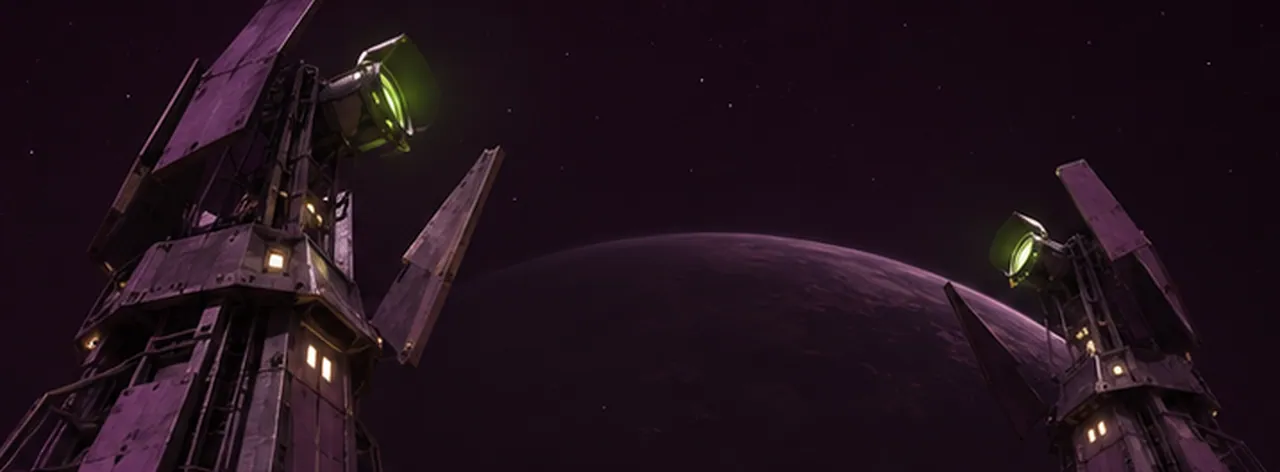
Open on two widely separated relays
On the dark side of the fictional orbit, one beacon shows a pale line just above the edge of the planet. A second one is visible from a different angle but takes longer to recognize in the surrounding darkness. The first step is to find the fixed arm at the lower part of the nearer station. Its direction remains useful after the other relay appears in the wide picture.
Compare the two heads before turning
The near emitter has a small bright part visible from the side, while the farther one shows a broad patch. Turning the view reveals their angles in a different order. Two Pulses Out of Step studies one comparison where the farther light appears a little later despite staying in a recognizable place. The player can hold the near angle and change which position they use to check the next arrival.
Look for a support that survives a longer silence
When one relay enters the darker side of the path, the open light may disappear. A metal beam below it remains visible against the faint curve of the planet. A Watch across the Silent Side describes how this shape gives a place to look while waiting. It matters because the next visible change sits close to the old position, even when the rest of the light around the relay has faded.
Test a new alignment without leaving the old view
The keeper can change the nearer head while leaving the camera pointed back toward the original support. There is enough room to see how far the two angles have shifted. The later pulse should appear on the farther side at a position a player can compare with the earlier one. The wide scene remains available to confirm the gap after a closer view of the first glow.
Use a smaller signal to confirm the broad result
The two parts of the route can hold a clear connection before the colony responds. Wait for a narrow arrival next to the earlier mark on the far relay. The first arrival might remain pale if the wider signal was just coming back into the view. There is time to check the receiver from two positions before deciding that the view has changed in a lasting way.
Build the orbit in layers of darkness
Most of the environment uses deep plum with several thin edges of light on the instruments. The planet’s curve stays low in the frame and is visible for varying parts of the movement. A little violet light around the near head marks the view even after the emitter has stopped showing green. The distant relay can remain small while keeping a recognizable corner against the wider background.
A concept around two positions
The current prototype studies one adjustment around a dark gap in an invented orbit. Numbered Beacons offers a broad image of the two heads before linking to this route. A later case could switch which station becomes visible first and see whether the keeper can find a new reference before a reply returns. The first goal is to make the separation, the quiet interval and the result recognizable from both sides.