
A Watch across the Silent Side
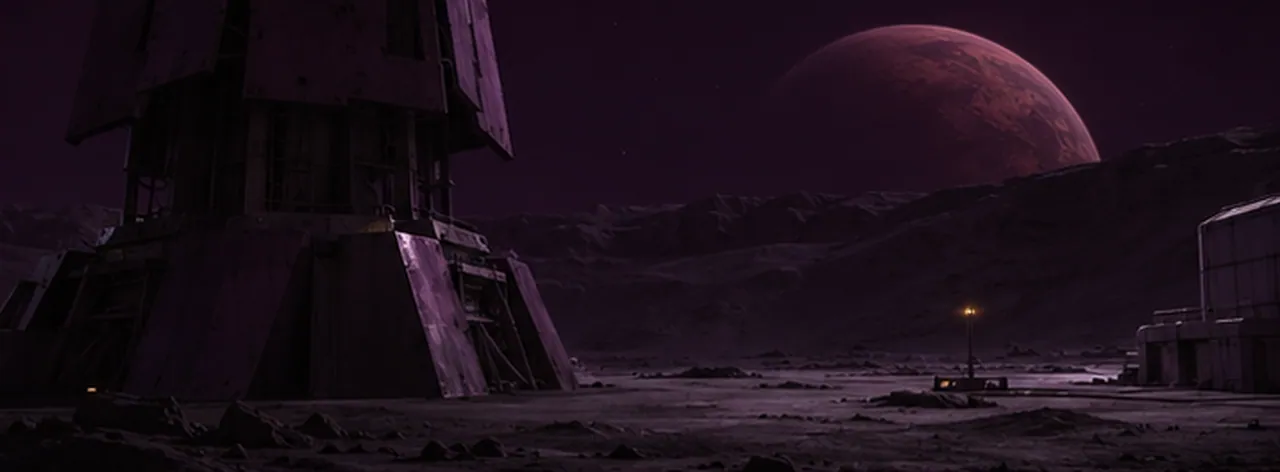
Begin after the light has left the frame
On the silent side of the orbit, a bright emitter disappears behind the darker edge of its own support. The farther relay remains visible as a small silhouette. In the first version the rest of the view became so faint that a person could not tell which instrument they had been following. The important interval passed without any reliable direction for the next look.
Hold a quiet reference under the dark side
The revised watch keeps the lower part of one large optical support visible near the curve of the planet. A light on the colony gives a distant point farther below it. These shapes remain in a steady relation while the beacon head rotates. The keeper can locate the dark part of the relay before the first actual signal appears again. The view gives enough orientation to stay at the same place during a longer pause.
Move beyond the older angle only after comparing
In Beacon After the Long Dark there are two ways to see the returning emitter. One leaves a direct look at the darker support and the other looks past a brighter part of the planet. The wide route lets the keeper return to a place where both are visible before making an adjustment. If the new position hides the support too early, the smaller light on the colony can give a direction back toward it.
Let the returning event use a nearby edge
The first pulse beyond the dark side appears near the end of the metal beam. It does not replace the whole view. A second narrow light becomes visible as the orbit continues. Compare those two appearances with the fixed part of the support. Two Pulses Out of Step uses a similar comparison in a shorter interval while both relay heads remain in view.
Avoid making absence a mistake on its own
Earlier tests signaled a failure as soon as a watch produced no clear reply. The new version gives a little room to wait and look at a wider available area. One or both supports may be visible even when the brightest point is gone. The choice comes from comparing those details with what you expect from the next change. A later reply can still be recognized against the same shape.
Change how near the planet feels
The dark curve fills more of the frame from lower in the receiver. Looking higher gives an empty view above the colony and leaves a wider edge beneath the beam. Either is a valid place to wait provided at least one point remains recognizable. We want people to use the familiar support because it helps them understand where they are, rather than requiring a correct camera angle for the whole watch.
Continue past the first visible return
The interface can open another picture once it verifies the first arrival. Keep enough of the previous angle to show how the beacon head came back into sight. The colony remains a small point for another interval, when the player can compare the second relay with what it did before. A Threshold below the Noise follows a much smaller return at the receiver and provides a way to think about the difference in scale.
File the quieter watch with others from the orbit
Deep Space Log records the quiet side next to the work on offset pulses. We may try a second stretch where the same beam is visible against a darker corner of the planet. The next scene should still offer a place to watch during a silence and enough of the older view to make a new glow recognizable when it returns.