
Two Pulses Out of Step
Watch the first relay near the rim
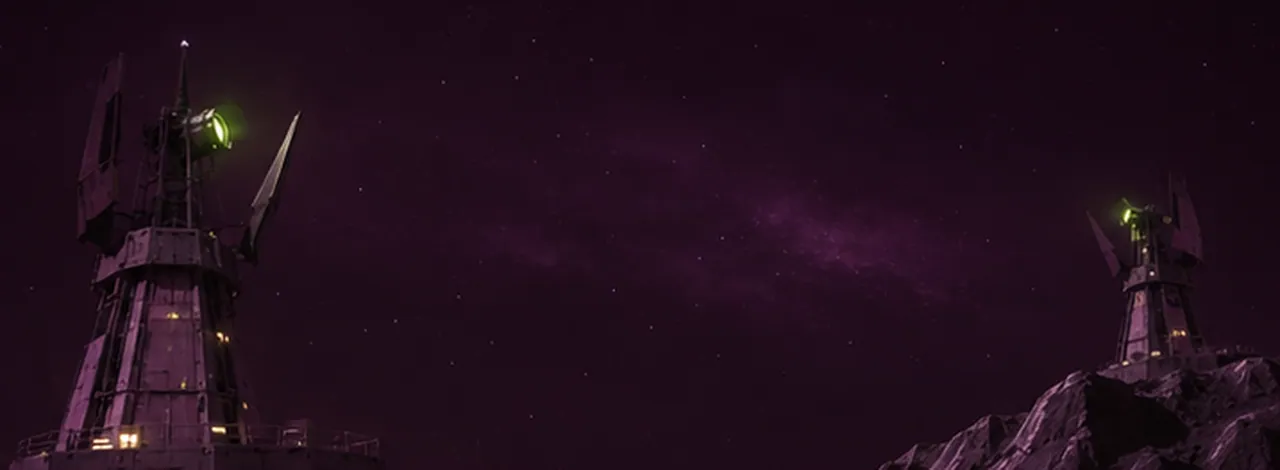
A pale pulse begins around one of the stations before its partner returns a similar light. The objects are near different sides of the orbital view, so the relationship is hard to judge when the camera shows only one. An early picture drew the two light events at almost the same time and then widened the shot. It hid the interval during which the farther relay had not responded yet.
Give a first pulse something fixed to pass
The near relay sits next to a short platform with a distinctive bright edge. Its light crosses just above that edge. Farther away the second head is visible next to a thin support that can be kept in the same view for a little while. The fixed things give the viewer two places to look for the start of the interval. Keeping both in the picture is more useful than lighting most of the gap between them.
Use a different direction for the later event
We moved the glow that arrives second farther up the side of the other relay. Its shape is narrower and appears farther from the outline of the planet. From the wider picture it still seems to belong to the same exchange. A closer position reveals how much later it became visible. The separation in position gives enough time to decide whether it is the subsequent pulse or a local reflected image of the first.
Carry a position through a smaller rotation
Beacon After the Long Dark gives the keeper a short view of the first relay while turning to check the second one. The lower end of the near platform stays in view through most of that move. Compare its line with the support farther out. When the distant light appears, make a note of which side of the support it reaches before looking back at the nearer station.
Keep an older interval in the test
The prototype can show the same pair of pulses before and after a change of viewpoint. One player may see both. Another may be looking near the dark side for the second already. A little flare at the edge of the closest station offers a direction for the returning watch. The goal is to help locate the older position when the movement continues rather than repeat the entire welcome view after a mistake.
Use the quiet stretch without adding a timer
A Watch across the Silent Side describes how a fixed mark can carry through a silence. In the current case the interval is short, and the player has two places to compare as its light changes. Both ends of the movement are still useful if the timing changes. We can vary which relay responds first in smaller scenes after the original offset can be recognized.
Test a repeated local light
An Echo from the Shell describes a smaller reflected change that stays much closer to its source. In this study the central position of the second signal is a long way from the earlier glow. Keeping a darker region between them reinforces that separation. Watch from the farther side and one mark from the near support should remain visible while following the later light out across the open area.
Record the two positions along with their delay
Deep Space Log groups this observation under the second beacon. If another prototype version puts one of the heads lower in the wide picture, check whether the gap can still be placed. The earlier stills can show how the far relay appeared during the silence. We want to keep enough context for somebody who starts looking after the first flash has already left the view.